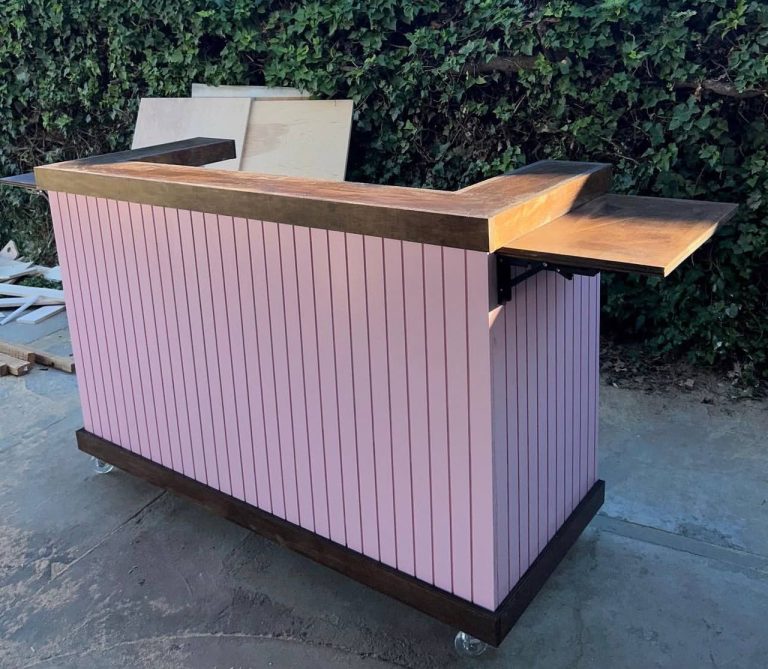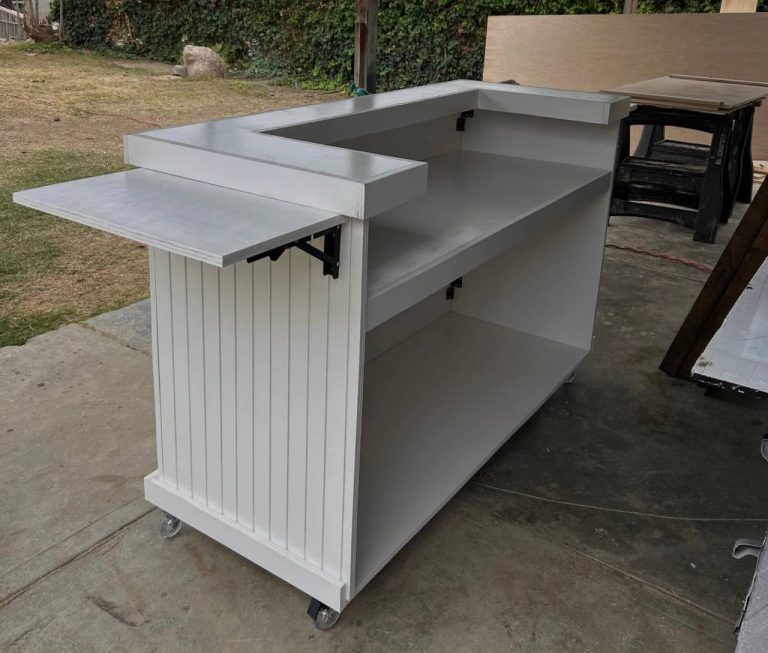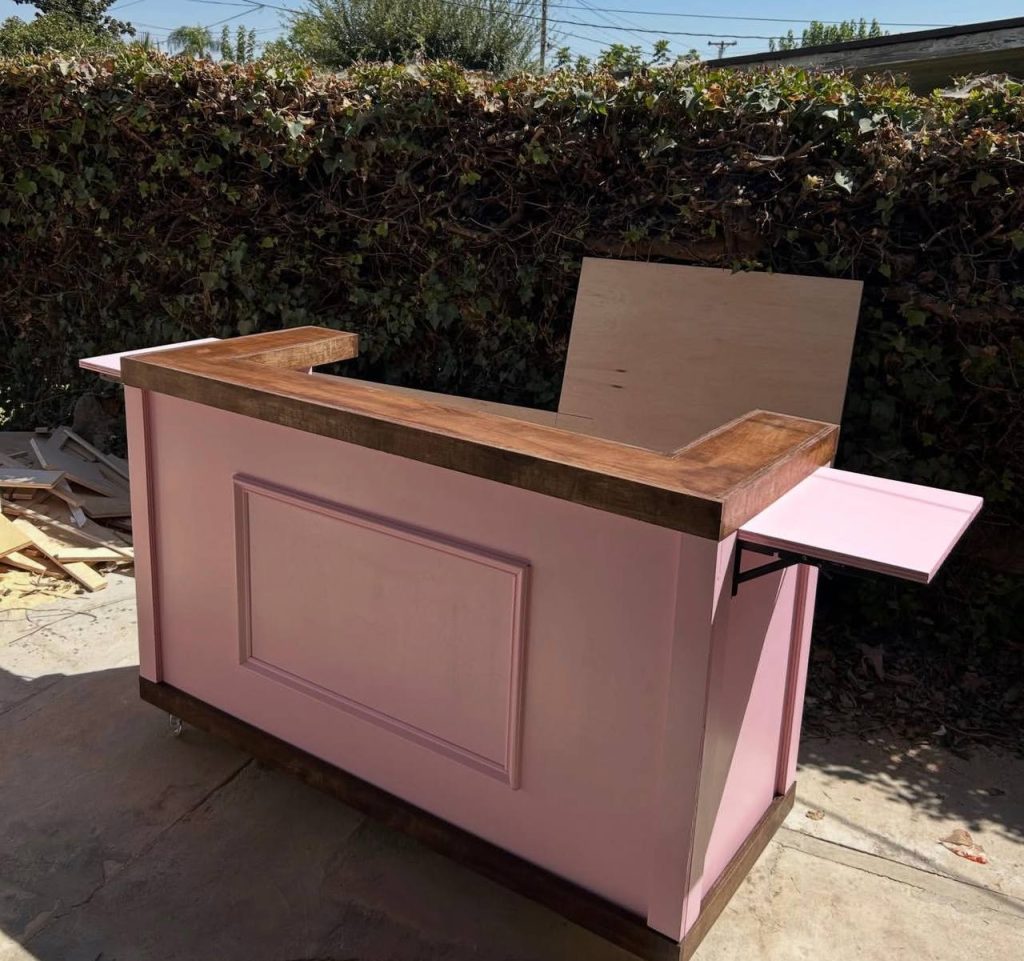
People ask why every cart that leaves our shop is built from the same two materials: Baltic birch plywood for the body and hard maple for the tops and trim. It is not habit, and it is not because they are the cheapest option, because they are not. It is because, after building carts that get rolled across gravel, loaded into trailers, rained on at farm weddings and scrubbed every night, these two have held up where other choices did not. Here is what each one does, what it costs you in trade offs, and why we think the combination is right for a working cart.
What Baltic birch actually is
Baltic birch is a plywood made entirely of thin birch veneers, glued with the grain of each layer running at right angles to the one below. A sheet of three quarter inch Baltic birch typically has thirteen plies; the same thickness in ordinary hardwood plywood might have five or seven, with a thick, soft core of poplar or fir hidden under a paper thin face veneer. The difference shows up the first time you drive a screw into an edge, cut a dado, or look at the exposed edge of a shelf.
What that construction gives a cart:
- Stiffness. Thin plies at alternating angles make a panel that resists bending and twisting far better than a core plywood of the same thickness. A cart body is a box with a big hole in the back, and it needs that stiffness to stay square when it drops off a curb.
- Screw holding. With no soft core, screws and threaded inserts bite into solid birch all the way through. This is what makes a flat pack kit possible; you cannot bolt a cart together through a poplar core and expect it to stay tight.
- Clean edges. The edge of a Baltic birch panel is a stack of even stripes that can be sanded, eased and finished as a design feature. We often leave edges exposed under a clear finish rather than hiding them behind edge banding.
- Flatness and consistency. Sheets are flat, void free in the better grades, and consistent in thickness, which matters when panels have to slot into machined grooves.
- Weight. It is heavier than a poplar core sheet of the same size. We treat that as the price of the stiffness, and we design the structure so that there is no more plywood in the cart than it needs.
The common thicknesses on our carts are three quarter inch for the main structural panels (sides, base, counter substrate) and half inch for backs, dividers and panel inserts where stiffness is less critical and weight matters more. Those are typical choices in cabinet work generally, not a rule.
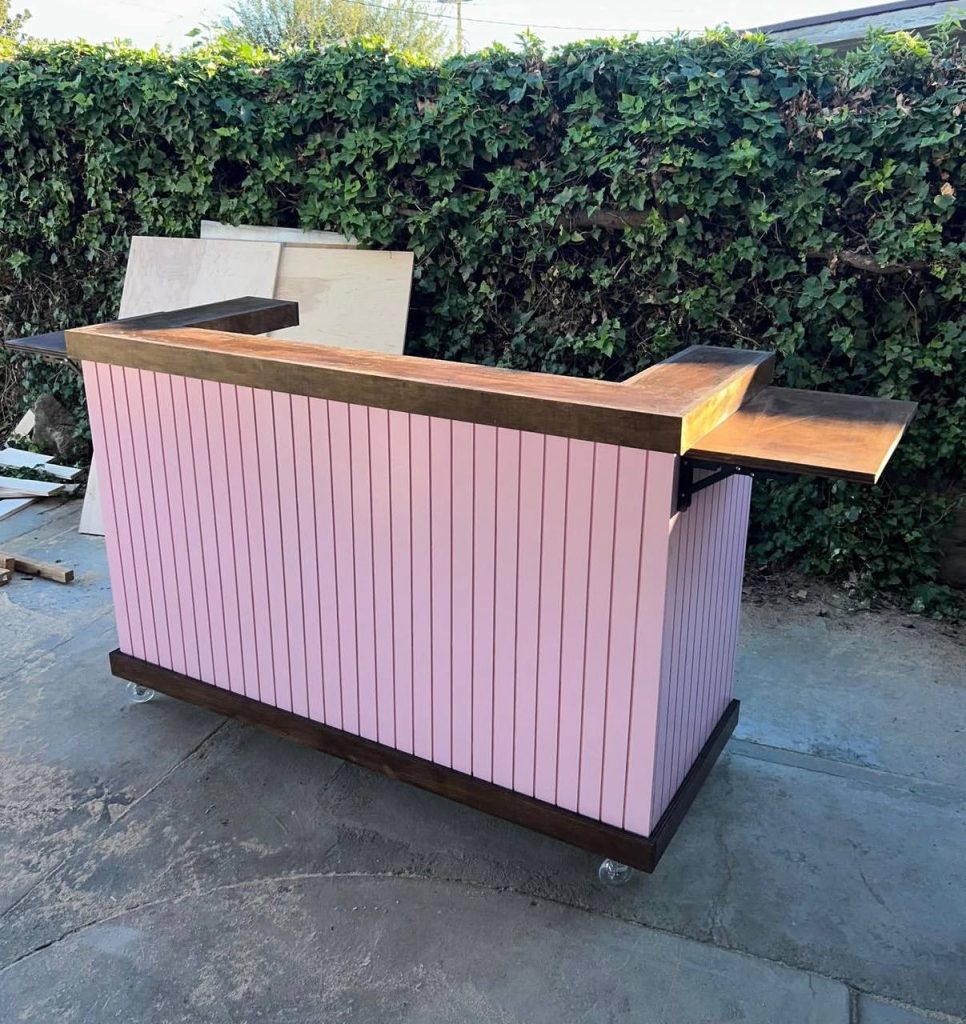
Where it comes from and why that matters
Baltic birch was named for where it was originally milled, around the Baltic Sea. Supply has shifted over the last several years and sheets labeled as Baltic birch now come from a range of countries. The grading and glue standards vary, and some imported birch plywood is a long way from the void free, consistent product the name implies. We inspect what comes in. If a sheet has voids in the plies, a thin face or a wavy core, it does not go into a cart, and if a supplier sends a run of those we change suppliers. Ask any builder what grade they use and where it is from; a good one will tell you.
The case for hard maple on top
The counter top on a cart takes more abuse than any other part: hot pitchers, knocked portafilters, spilled syrup, cleaning chemicals, and a thousand cups set down a little too hard. For that surface we use solid hard maple, glued up from narrow boards into a single slab, then sealed.
Hard maple, sometimes called sugar maple or rock maple, is among the harder domestic hardwoods and has been the standard for butcher blocks, bowling alleys and workbench tops for a very long time for the same reasons it suits a cart top:
- It is dense and resists denting. A dropped tamper leaves a mark on softer woods and usually nothing on maple.
- It has a tight, closed grain, so it does not trap grime the way an open grained wood like oak does. That matters when a health inspector runs a finger across it.
- It is light in color and takes stain and clear finish evenly, so a top can be left pale, stained walnut dark, or anything between, to match the body.
- It machines cleanly, which makes the edges crisp and the sink cutouts tidy.
- It is domestic and widely available, so a damaged top can be repaired or replaced years later with the same material.
The trade offs are weight again, since maple is heavy, and movement. Solid wood expands and contracts across the grain with humidity, and a wide maple slab has to be attached to the plywood body in a way that lets it move. We fasten tops with slotted or elongated holes so the top can breathe without cracking the slab or racking the cart. A top glued hard to the plywood will split eventually.
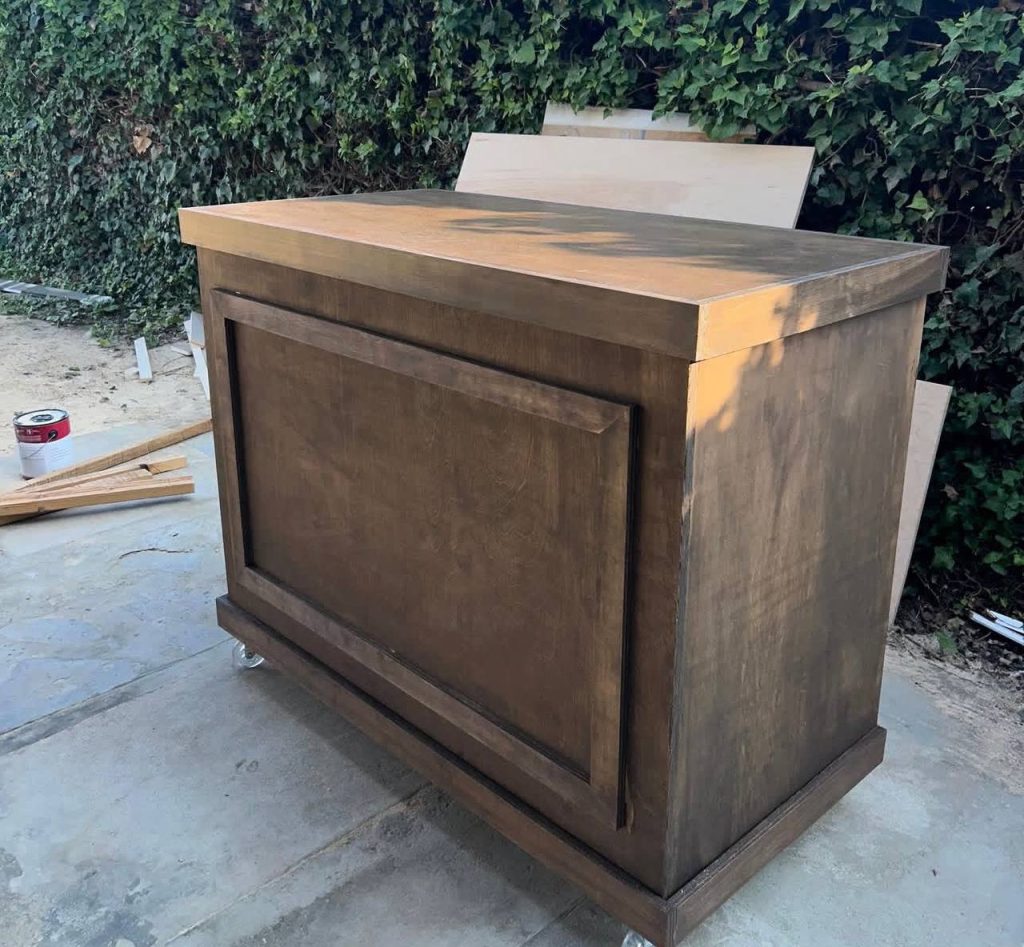
Why not something else
We get asked about the alternatives often enough that it is worth going through them.
MDF is flat and cheap and takes paint beautifully. It is also heavy, swells the moment it meets water, and holds screws poorly. For a cart that will see rain and get hosed down, it is the wrong material, and we do not use it.
Ordinary hardwood plywood, the kind sold at home centers with a thin birch or oak face over a softwood core, is lighter and less expensive. The core is the problem. Screws strip, edges crumble, panels bow, and the face veneer is so thin that one aggressive sanding goes through it. It works for a cart that lives indoors and never moves. It does not work for one that rolls.
Laminate or solid surface counters are legitimately good food contact surfaces, and in some sink areas we will use a solid surface insert. For the main top they lose the warmth that people choose a wooden cart for in the first place, and laminate chips at the edges in a way that cannot be repaired.
Other hardwoods for tops: walnut is beautiful and softer than maple, cherry darkens unevenly in sun, oak is open grained, ash is a reasonable alternative. If a customer wants walnut for the look, we will build it and tell them it will show more wear. Most choose maple stained to the walnut color instead.
Steel and aluminum frames with wood panels are strong and light, and they are the right answer for some food trucks and large trailers. For a cart that goes through a door and is meant to look like furniture, a well built plywood box is stiff enough and far easier to repair.
How the two work together
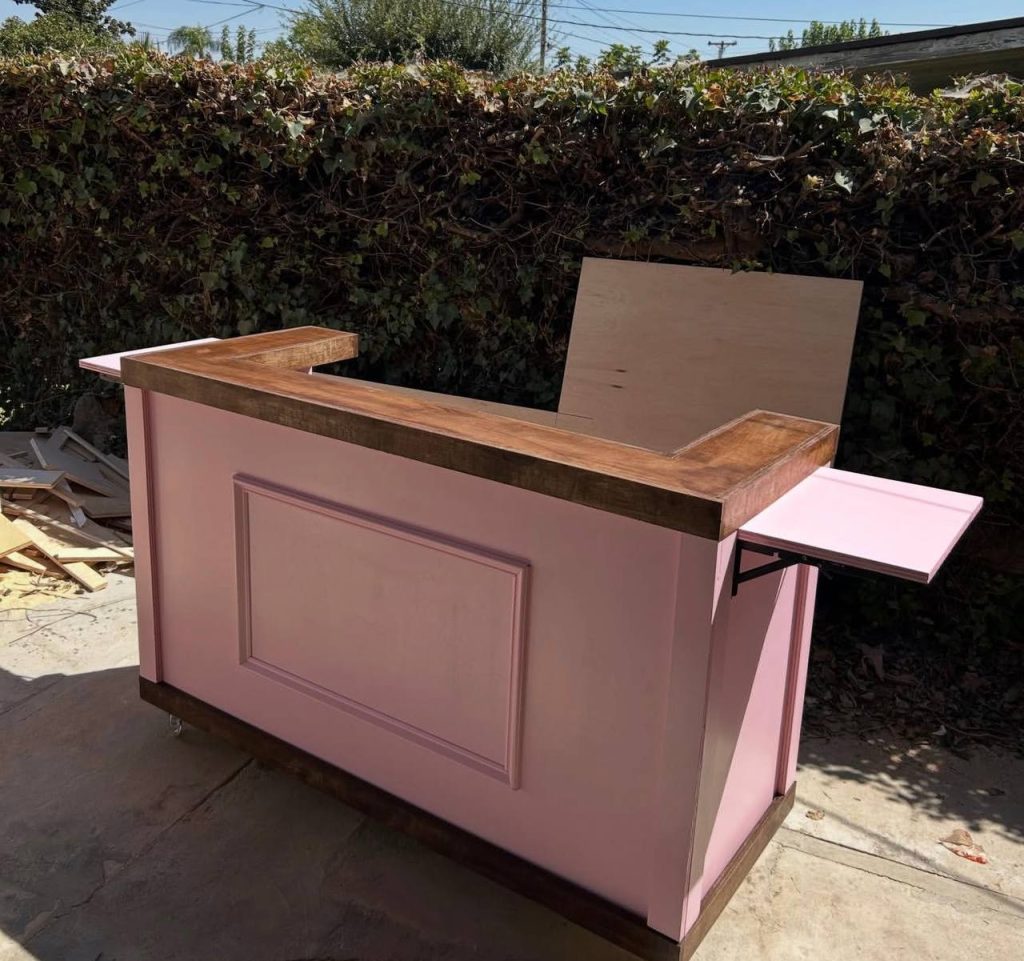
A cart body in Baltic birch and a top in hard maple is a combination that plays to each material’s strength. The plywood does the structural work: it is stable, square and does not move with the seasons, so the box stays a box. The solid maple does the surface work: it takes the wear, repairs easily with a sanding and a fresh coat, and looks like something you would have in a kitchen. Where they meet, we let the maple float on the plywood.
The result is a cart that you can refinish rather than replace. A ten year old maple top can be sanded back and oiled and look new; a plywood side with a scrape can be filled, sanded and repainted. That is the real argument for these materials. Not that they never get damaged, but that when they do, the damage is a weekend’s work rather than a new cart.
What to ask any builder
- What plywood, exactly, and what grade? Ask to see an edge.
- Is the top solid wood, veneer or laminate? If solid, how is it attached to allow for movement?
- How are the edges of the plywood finished and sealed?
- What happens to a screw hole in the structure after it has been driven three times?
- Can the top be refinished, and how?
The answers tell you how long the cart will last and how it will age. The finish on top is the part that photographs well; the materials underneath are the part you live with.