The finish is the part of a cart that everyone sees and almost nobody thinks about until it starts to fail. It is also the one decision where what looks best in a photograph and what holds up best over a season pull in different directions. This article is about the finishes we use on carts, what each one is good at, where each one falls short, and how to look after whichever you choose. If you already own a cart and want to keep it looking right, skip to the care section at the end.
What a cart finish has to survive
Before choosing a finish it is worth being honest about what it is up against. A working cart’s surfaces see:
- Water, constantly: spills, rinsing, rain at outdoor events, condensation off cold tanks.
- Heat: steam wands, hot pitchers, the side of an espresso machine.
- Acids and sugars: coffee, milk, citrus, syrups, cocktail mix.
- Cleaners: sanitizer solution, degreasers, and the occasional bleach wipe from a well meaning helper.
- Abrasion: cups dragged across the top, straps across the sides, cases slid along shelves.
- Sun: ultraviolet light fading pigment and yellowing clear coats.
- Impact: corners meeting door frames, trailer walls and tailgates.
No single finish handles all of those perfectly. The choice is about which failures you can live with and how much upkeep you are willing to do.
Paint on the body
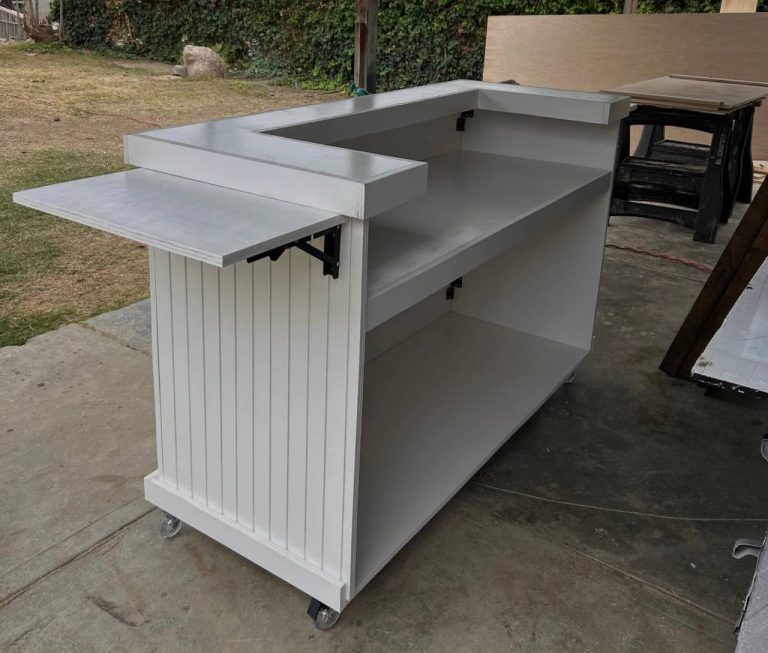
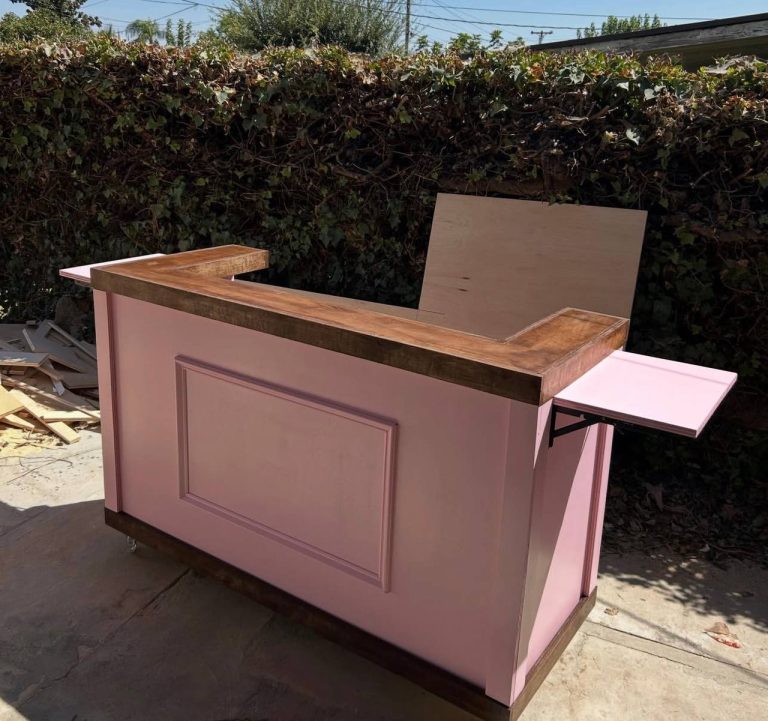
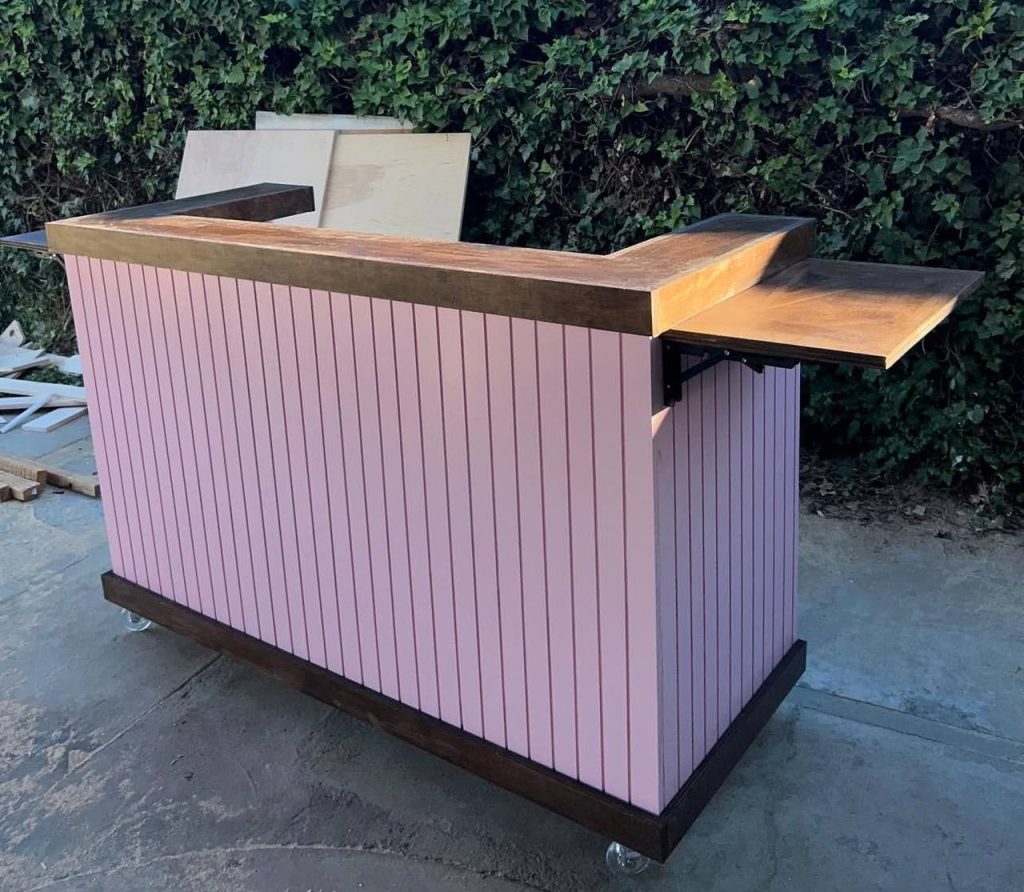
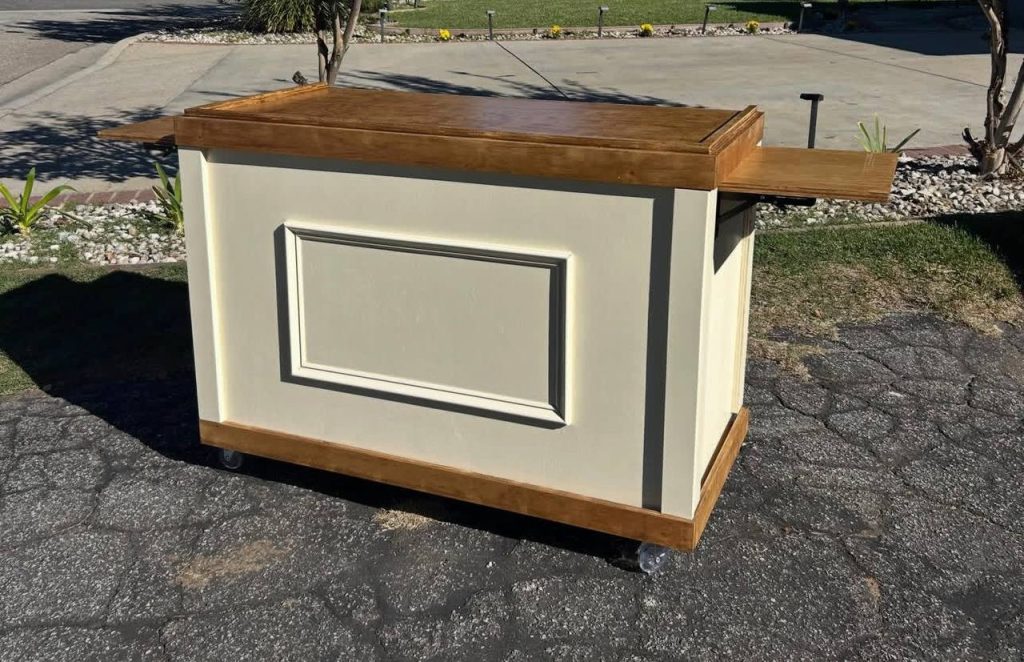
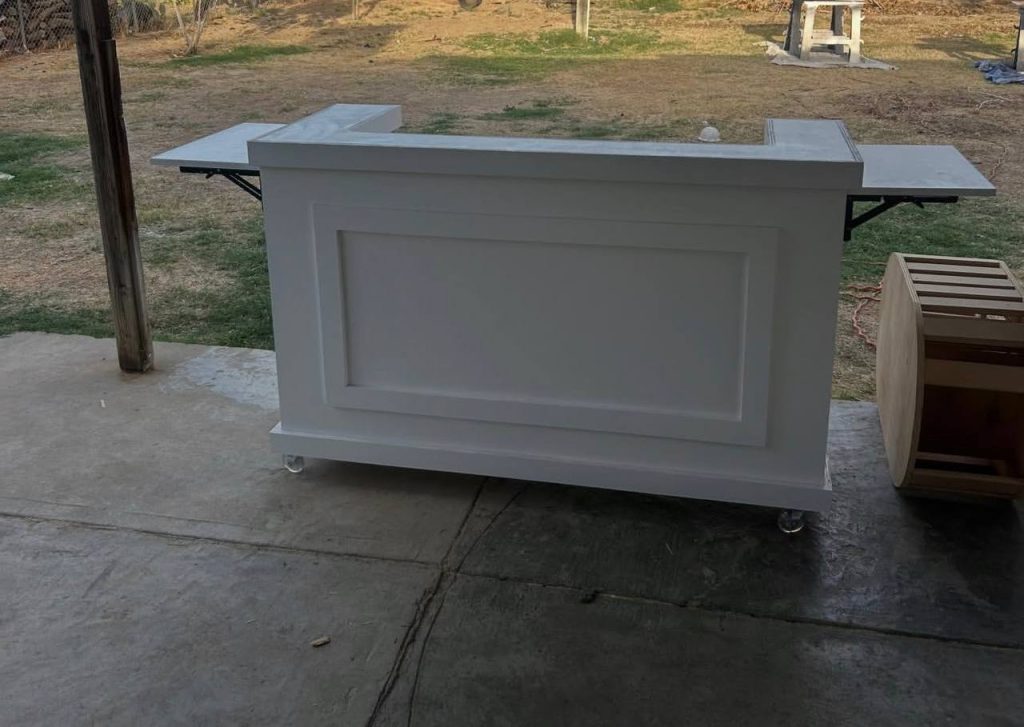
Most of the carts we build have painted bodies, because paint hides the plywood face and gives the customer any color they want. The system that has held up for us is a bonding primer, sanded, followed by several coats of a hard, water based enamel of the kind made for cabinets and trim. Modern cabinet enamels cure to a hard film that resists water and most cleaners, touch up reasonably well, and do not yellow the way oil based paints do.
What paint is good at: color, hiding the substrate, easy cleaning, straightforward touch up of small chips with a brush and the leftover can.
Where paint falls short: edges and corners. A chip on a corner exposes the plywood, and if water gets under the edge of the film, the paint lifts around it. The answer is to ease every edge before painting so there is no sharp corner for the film to break on, to seal the plywood edges thoroughly, and to touch up chips the week they happen rather than at the end of the season. We send a small container of the body color with every painted cart for exactly that reason.
Sprayed finish gives a smoother result than brushed and is what we do in the shop; the trade off is that a sprayed finish is harder to touch up invisibly. A brushed touch up on a sprayed panel will show slightly in raking light. On a working cart that is an acceptable trade.
Stain on birch and maple
Stained carts show the wood, and that is the appeal and the challenge. Birch plywood and maple are both blotch prone: the grain absorbs stain unevenly, and a dark stain applied straight to bare birch comes out mottled. The fix is a pre stain conditioner or a dilute sealer coat before the stain, which evens out the absorption, followed by the stain, followed by a clear protective topcoat. A stain by itself gives no protection at all; it is color, not a finish.
Gel stains sit more on the surface than penetrating stains and blotch less on birch, which is why they are popular for plywood. Dye stains give clearer, deeper color on maple. Which we use depends on the color the customer wants and on which wood is being stained. A dark walnut tone on a maple top, which is a common request, is one of the harder things to do evenly, and it is worth asking to see a sample on the actual wood before committing.
Clear finishes on tops
The top is where the finish decision matters most, because it is the surface in contact with food and drink, the surface that gets wiped twenty times a shift, and the surface people touch. The two families of clear finish we use are hardwax oils and film finishes, and they behave very differently.
Hardwax oil penetrates the wood and leaves a thin, matte, natural looking surface. It is easy to apply, easy to repair (sand the damaged patch, wipe on more oil, done) and it feels like wood. It is also less resistant to standing water, heat rings and strong cleaners than a film, and it needs to be refreshed, typically once or twice a season on a cart that works often. If you like the look of bare wood and are willing to spend an hour with a rag twice a year, it is a very good choice.
Film finishes, meaning water based polyurethane, conversion varnish and similar, sit on top of the wood as a hard layer. They resist water, heat and chemicals better, need no routine maintenance beyond cleaning, and look slightly more like a coating than like wood. The catch is repair. A deep scratch or a worn through patch in a film finish cannot be spot fixed invisibly; the whole top has to be sanded back and recoated. On a cart that is a day’s work rather than an hour’s.
For food contact, most finishes sold for use on counters and cutting boards are considered safe once fully cured, but cure times are longer than dry times, often a matter of weeks for a film finish to reach full hardness. Health departments generally want food contact surfaces to be smooth, nonabsorbent and cleanable, and a properly finished maple top meets that in most jurisdictions, but some inspectors prefer a stainless or solid surface insert in the direct food prep area. Ask yours before deciding, and confirm the finish manufacturer’s own guidance on food contact.
Dark tops and light tops
A pale maple top under a clear finish shows coffee stains if they are left to sit, and shows every scuff. A dark stained top hides stains and shows dust, scratches and water rings instead. Neither is better; it is a question of what kind of wear you would rather look at. Operators who run coffee carts often lean toward darker tops. Bar operators who serve clear spirits and citrus often prefer the pale top with a film finish, because citrus marks a dark stained top quickly.
Exposed plywood edges
On some carts we leave the Baltic birch edges exposed as a design element under a clear finish. The striped edge is handsome, and it is also the most absorbent surface on the cart. Exposed edges get extra coats of finish, sanded between, until they stop drinking it in. If a cart will spend a lot of time outdoors, we steer customers away from exposed edges on the base rails, which sit closest to wet ground, and toward a painted or capped base.
Caring for the finish
The habits that keep a finish looking right are small and daily.
- Wipe surfaces with a damp cloth and a mild dish soap solution at the end of every shift. Rinse off sanitizer solution rather than letting it dry on the wood.
- Do not leave standing water or wet towels on a wooden top overnight.
- Put something under anything hot. A trivet under the knock box and a mat under the machine’s drip tray cost nothing.
- Keep the body out of direct sun in storage, and rotate the cart if one side faces a window.
- Touch up paint chips within the week. Clean the chip, let it dry, dab the color on with a small brush, let it cure before loading.
- For a hardwax oil top: when water stops beading and the surface looks dry in patches, clean it, scuff lightly, and wipe on a fresh coat.
- For a film finished top: clean only, and plan on a full sand and recoat when it finally wears through, which on a maple top is years away with normal care.
- Avoid abrasive pads, bleach and solvent cleaners on any finish. They dull film finishes and strip oil finishes.
- Renew the sealant around sink rims when it starts to pull away. Water under a sink rim is the most common cause of a swollen counter.
What to choose
If you want a cart that looks like furniture and you enjoy maintaining it, a stained or clear body and a hardwax oil top is a lovely thing. If you want to wipe it down and forget about it, painted body, dark stained top, film finish. If your health department wants a nonporous prep surface, plan on a stainless or solid surface insert where the drinks are made and keep the maple where guests lean. Whatever you pick, ask for a finished sample on the real wood before you commit, and ask for a small container of the touch up color to live in the cart. Finish is not permanent. It is maintained, and the easiest finish to maintain is the one you understood when you chose it.