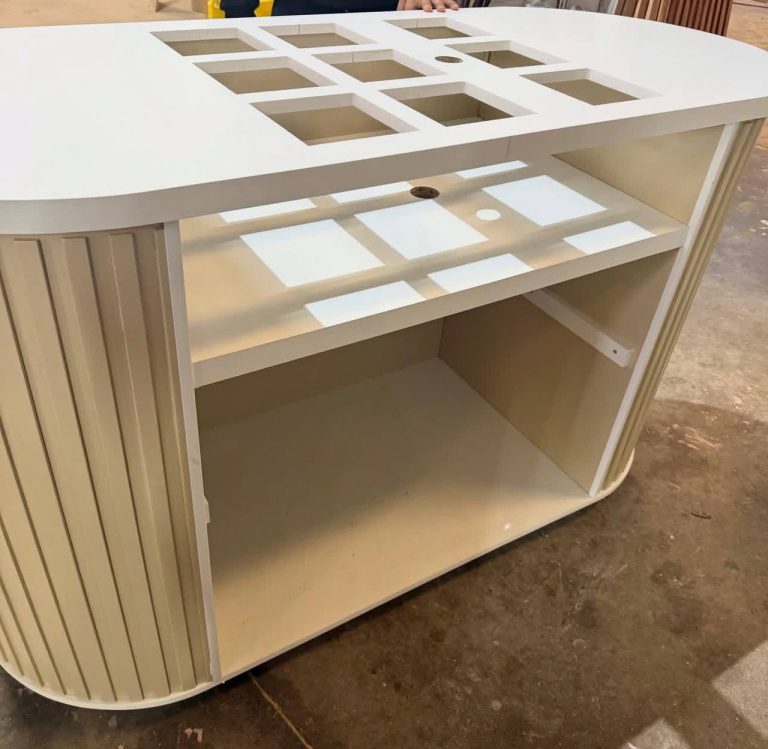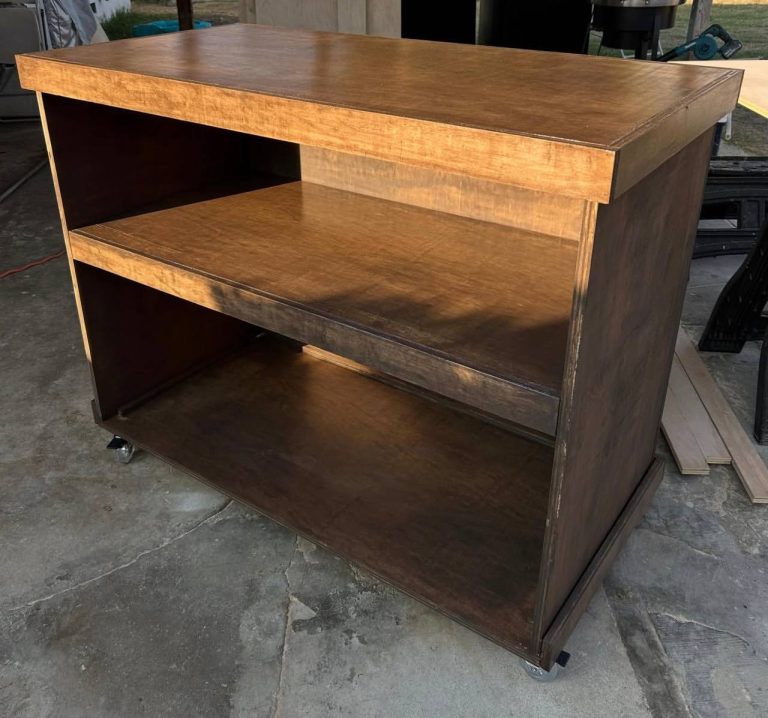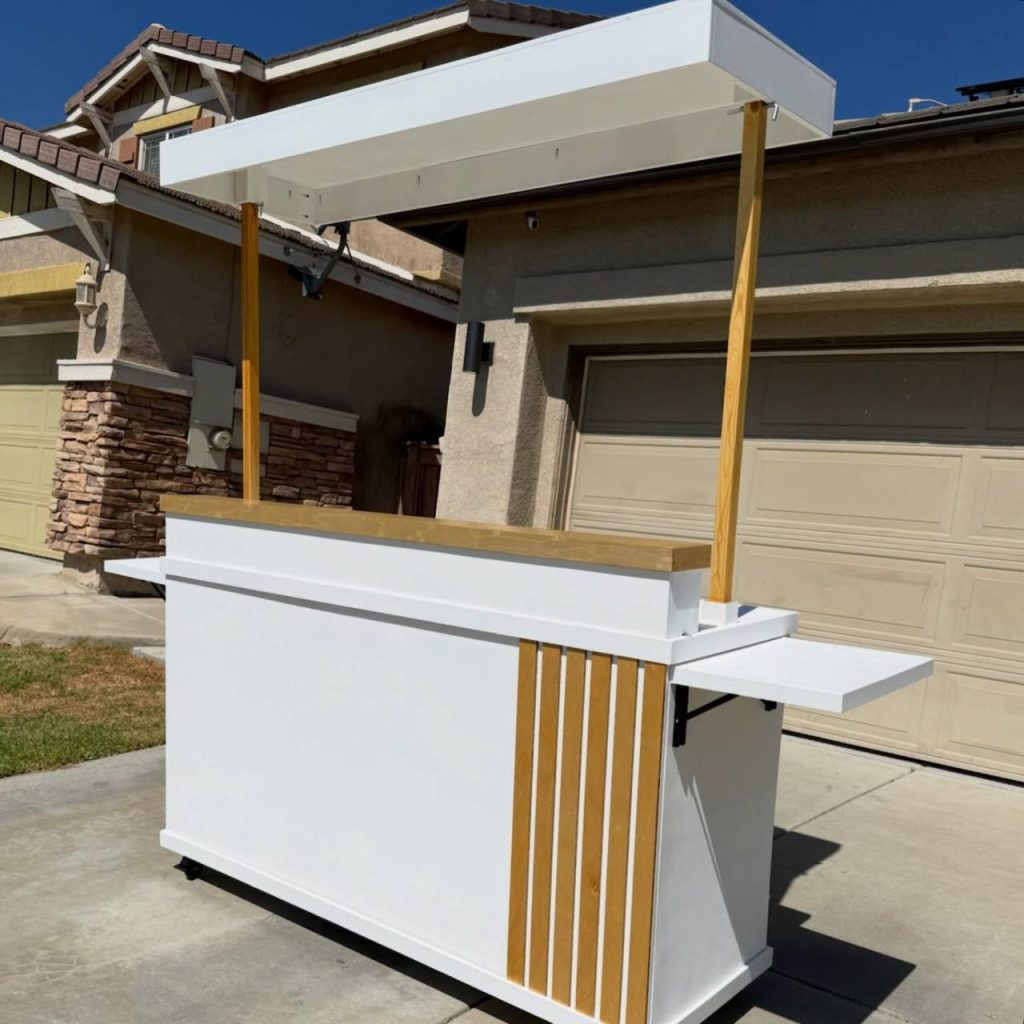
Size is the first decision on any cart, and it is the one people most often get wrong in both directions. A cart that is too small turns every shift into a juggling act. A cart that is too big will not fit through the door of the venue that just booked you, and you will find that out at seven in the morning with a line forming. Here is how we walk customers through the question in the shop, with the numbers we hear most often and the trade offs behind them.
Start with the doors, not the equipment
Most people start by listing their equipment and adding up the inches. We start with the narrowest opening the cart will ever have to pass through. For a cart that works indoors at all, that is usually a standard interior door, and a typical residential or commercial door gives you somewhere around 30 to 36 inches of clear width once you account for the door itself and the stop. Elevators, loading docks, the side gate of a backyard venue and the back of your own vehicle all count too.
So the first number on the drawing is the depth of the cart, front to back, and we try to keep it under about 30 inches for anything that will roll through a door. Length is far more flexible, because a cart goes through a door end first. A cart that is 72 inches long and 28 inches deep will go places that a 48 by 36 inch cart simply cannot.
Measure the actual openings you expect to use. Church fellowship halls, downtown storefronts, hotel ballrooms and farm wedding barns all have different doors, and the one that limits you is the one you have not seen yet. If you do not know your venues yet, design for a standard door and you will rarely be stuck.
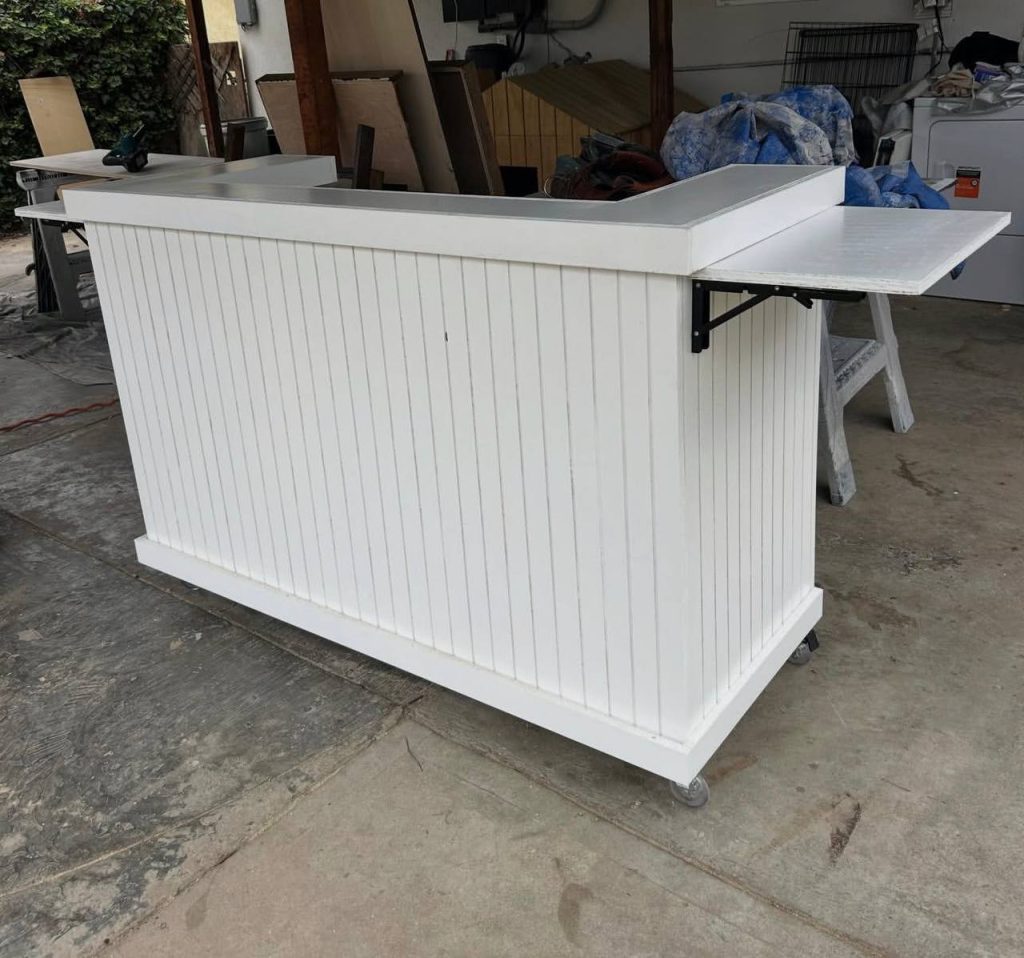
The three common footprints
In practice the carts we build fall into three rough sizes, and the names here are ours, not an industry standard.
- A compact cart, roughly 48 inches long and under 30 inches deep. One person works it. It holds a small espresso machine or a brewer, a grinder, a handwash setup and not much else. It fits in the back of most SUVs with the seats folded, which is the real reason people choose it.
- A standard cart, roughly 60 to 72 inches long and under 30 inches deep. Still one person, but with room for a two group machine, a grinder, a proper sink arrangement and a bit of counter to actually work on. This is what most full time coffee cart operators end up with.
- A long bar, 84 to 96 inches or more, often with fold down end shelves. Two people can work it comfortably. It is more common for mobile bars than coffee, because a bartender needs more horizontal space than a barista and does not have a machine eating the middle of the counter.
If you are unsure, the standard cart is the honest default. Almost nobody who buys the compact version wishes it were smaller, and almost nobody with the long bar wishes it were longer.
Counter height and what it does to your back
The working counter on a coffee cart is typically set near kitchen counter height, around 36 inches. That is where most people can tamp, steam and pour for several hours without hunching. Bar tops, the raised ledge where a guest leans and sets a drink, are typically closer to 42 inches. Many of our carts have both: a working surface at the lower height and a raised front counter that hides the mess and gives guests a place to stand.
Two things change these numbers. First, your own height. If you are well over six feet, a 36 inch counter will have you bending for every shot, and raising the whole cart two inches costs nothing at the drawing stage. Second, your machine. An espresso machine sits on top of the counter, and the cup rail on a tall machine can end up near eye level if the counter is already high. Measure the machine you actually plan to buy before you fix the counter height.
Weight is a size decision too
Every inch of length is another few pounds of plywood, and plywood is only the start. A two group espresso machine, a water heater, full tanks and a case of milk add up fast. Water alone is heavy: a gallon weighs a little over eight pounds, so a pair of five gallon tanks is more than eighty pounds before anything else goes on board.
This matters for three reasons. Casters have load ratings, and the cheap ones that come on a workshop cart are not meant for a loaded bar rolling across a gravel lot. Ramps have limits, and a long cart is awkward on a short ramp. And you, the person loading it at the end of a twelve hour day, have limits too. If the cart will be moved by one person, keep the dry weight where one person can tip it onto a ramp and hold it there. We talk about this more in the article on moving and storing a cart.
Match the size to the way you will actually sell
Think about your busiest realistic hour, not your average one. A farmers market cart might serve a steady trickle for four hours. A wedding cart serves nobody for an hour and then everybody at once when the ceremony lets out. The wedding cart needs more staging space: room for a tray of cups already lidded, room for a second person to take orders, room for the pastry display the couple insisted on.
Make a list of what sits on the counter at the same time during that peak hour. Machine, grinder, knock box, a pitcher rinser if you have one, a tray of cups, the tablet or cash box, syrup bottles. Lay those items out on a kitchen table with painter’s tape marking the counter edges, and work through a pretend rush. It sounds silly and it is the single most useful hour you can spend before you order a cart.
Fold down shelves and other ways to cheat
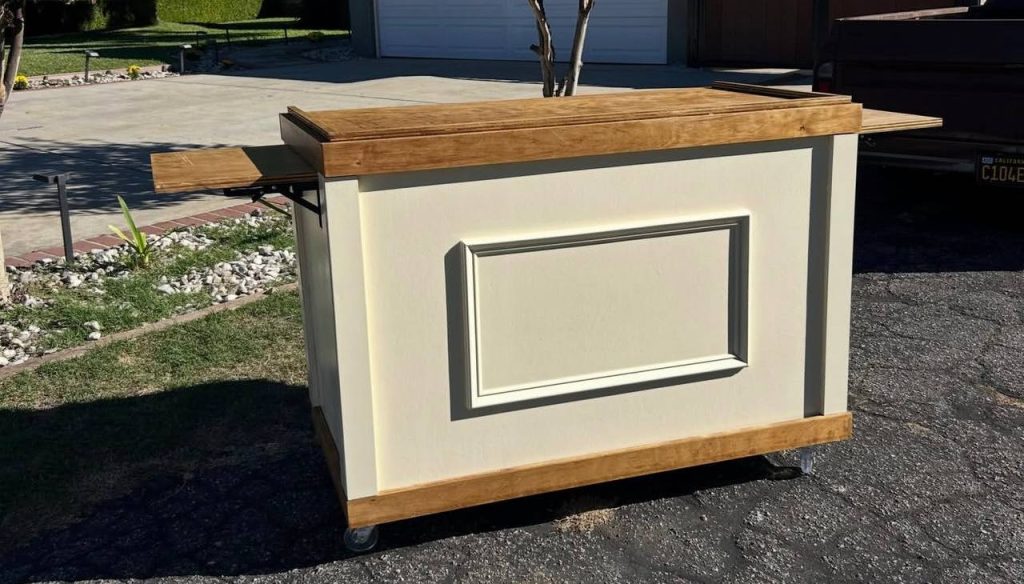
A cart that is 60 inches long with a fold down shelf on each end becomes 84 inches of counter when it is parked and 60 inches when it rolls. We put these on most bars for exactly that reason. The shelves hold the water station, the tip jar, the menu stand, a tray of garnishes, all the things that need a surface but do not need to be in front of you.
Other ways to get more cart out of a smaller footprint:
- A raised rear or front ledge, which adds a second tier of counter without adding depth.
- A pull out shelf under the counter for the cash drawer or the tablet.
- Removable side panels that double as a backdrop or menu board when the cart is set up.
- A separate small side table or a nesting set that rides inside the cart.
The trade off with every one of these is time. Each shelf is one more thing to fold, latch and check before you roll. If you set up and tear down daily, that adds up. If you set up once for a weekend, it does not matter at all.
A short checklist before you decide
- Measure the narrowest door, gate, elevator and vehicle opening you expect to use. Design the depth to that.
- Decide whether one or two people will work the cart during a rush.
- Tape out the counter on a table with your real equipment and run a pretend peak hour.
- Pick a counter height for the tallest regular operator, then check the machine height on top of it.
- Add up the loaded weight, including water, and make sure one person can still handle it if that is the plan.
- Lean toward the standard size unless your vehicle or your venues force you smaller.
A cart is a tool you will stand behind for hundreds of hours. Get the size right and the rest of the design tends to fall into place. Get it wrong and no amount of nice finish will make up for a counter that is six inches too short.